
If you look at it charitably, you could describe me as a casual observer on the fotocommunity (a German photo platform open to international photographers). I’ve set up a free profile with a noticeable blue tint, and I’ll just leave it at that. Since we’ve been taking photos in the woods, I’ve added another free account, this one with a green theme. I enjoy playing around with things like this; they offer unusual insights into my own work. There’s nothing more to it than that.
When I popped in to have a look again recently, I stumbled across an official FC email with the initially cryptic subject line ‘Phase 2 is live’, which becomes clear straight away when you read that it’s about the ‘Photo and AI sections now being completely separate’. Further details can be found in the blog post (German). The whole thing is voluntary, which means there’s no guarantee that someone won’t pass off something generated by AI as a photograph, but it’s a start. I find this step consistent, and to my mind it also embodies something that is deeply rooted in Far Eastern thinking and decision-making, something we are evidently increasingly losing sight of. I’m referring to the ‘both-and’ approach – the conscious decision not to judge what is right and what is wrong, but rather to allow both to stand. That doesn’t mean one isn’t allowed to develop a preference for engaging with one (e.g. photography) and ignoring the other. In short, that would be my own inclination. Incidentally, I owe the concept of ‘inclination’ to the incredibly insightful book *From Being to Life* by François Julien, about which I have written before.
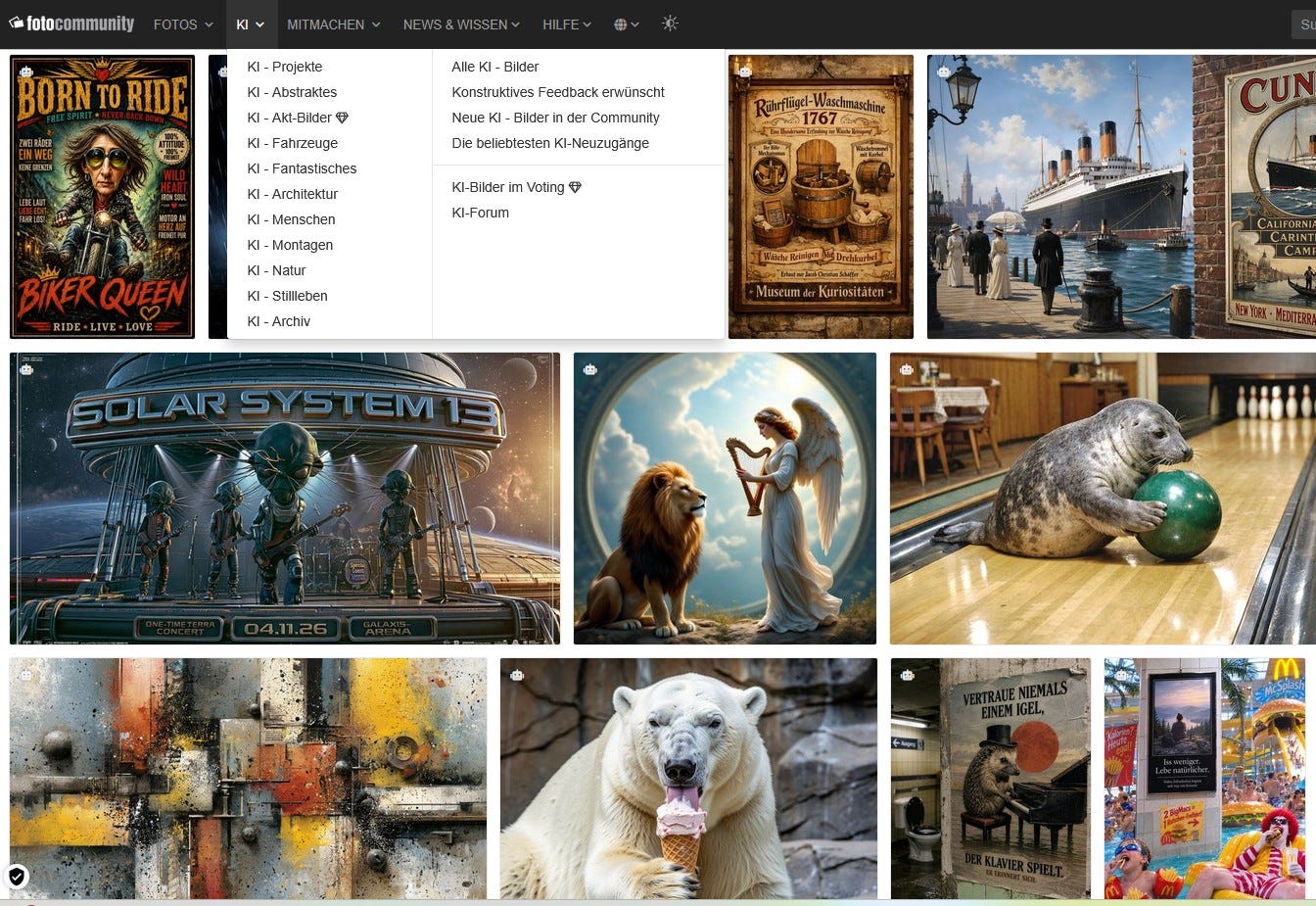
Let the dreamers generate their linguistic imagery; let the advertisers use AI to romanticise their products even further; let the staged image enthusiasts turn away from laborious and elaborate set-ups and masks and pull their images straight out of a test tube. Let artists engage with the subject and, ‘with a little help from their friend’, create breathtaking new simulations. I’m not interested in any of that.
I’m not going to rehash the whole debate on AI here, but one issue is certainly worth noting in this context. Namely, the question of at what point in the image-creation process the image must be described as ‘generated’. This question is important for photographers (including those who remain steadfastly committed to natural light), as the tools used for ‘post-production’ – or, to put it more simply, for editing photos – such as Lightroom or Photoshop and all their equivalents, are already significantly ‘infected’ with AI components. The current approach broadly distinguishes between three categories: firstly, alterations to the image that affect only small sections; secondly, partial generation, where larger sections are generated; and thirdly, images that are ‘fully or predominantly’ generated.
As far as I understand, one of the reasons for the decision to separate the fields of photography and AI is linked to the new EU legislation, which I have not yet looked into in any great detail. But this concerns labelling requirements. Article 50 of Regulation (EU) 2024/1689, better known as the EU AI Act, states that the ‘operator of a generative AI system’ must label the output as AI-generated; in the case of text, for example, this means adding the note ‘AI-generated’. If that were to happen, it would certainly be a first step. However, as long as this remains a distant prospect, required only by EU law, we will probably have to rely on voluntary disclosure as to whether one has used the light of the world or the “Word of God” to create one’s content, place our trust in it, and live by it.
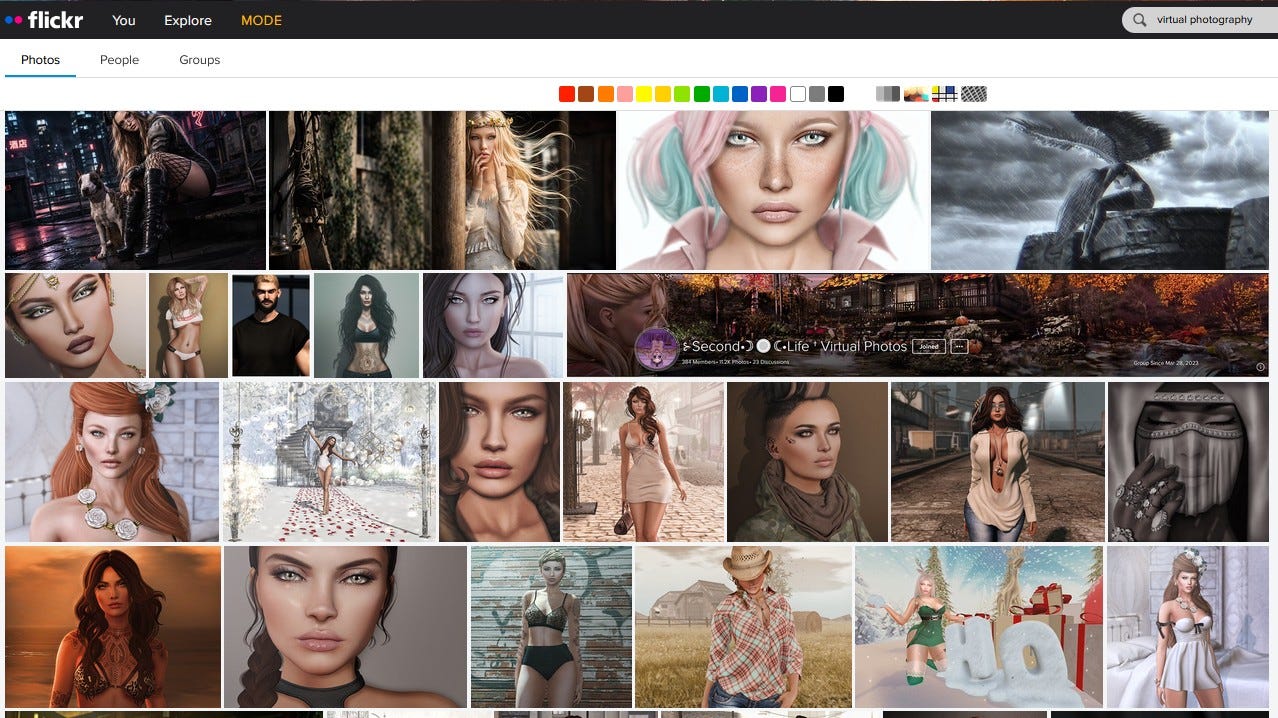
On flickr too, there appears to be a voluntary distinction in that generated images are supposed to be posted in categories such as ‘Virtual Photography’ or ‘Art/Illustration’. Here, too, it’s voluntary and not always consistent. Strangely enough, I have hardly any contact with AI-generated content creators on Flickr, because I have been pursuing my preference for documentary photography for almost twenty years and, in recent years, have also consistently unfollowed (almost) all promoting creators who have been tempted to generate AI content.
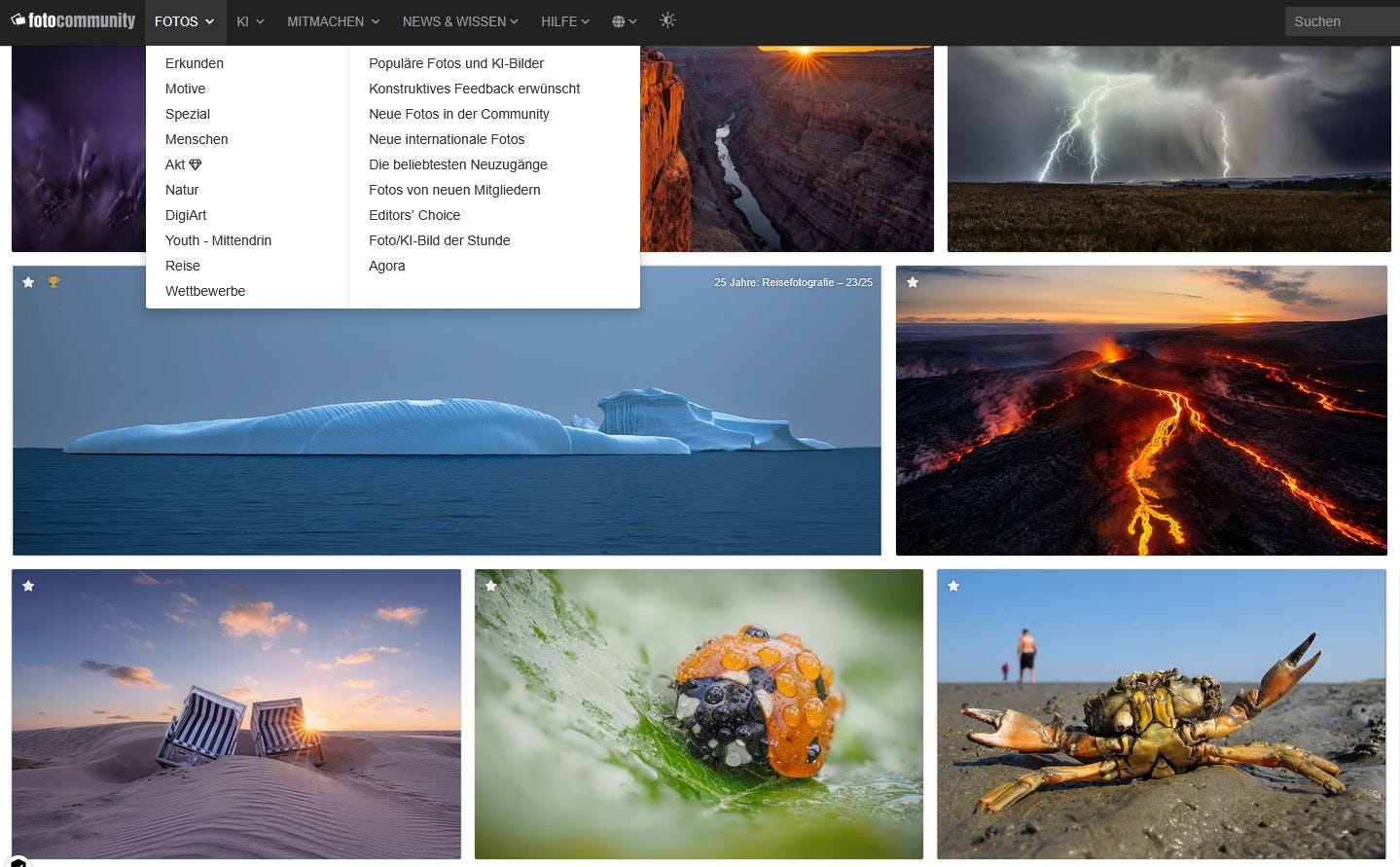
Even on fotocommunity, the separation isn’t entirely consistent. The ‘All’ category, which includes ‘Popular Photos and AI Images’, is classified under the umbrella term ‘Photos’ (see screenshot at the start of this post). In that respect, you can keep yourself somewhat separate or even take a peek over the fence from time to time.