Show me your face…
Aphoristic Thoughts about Portraits and Portrait Artists

Sometimes it’s the things you’ve only noticed in passing that end up preoccupying you the most. Take, for example, the exhibition ‘(Inter)faces of Predictions’ by photographer Sheung Yiu and theorist Megan Williams at C/O Berlin, which brings together so many loose ends relating to faces. Somehow, the thought that there might be an analogy between modern facial recognition and what has developed in various traditions as physiognomy has stayed with me ever since. Of course, there is also a huge difference in that one cultural practice tends to be used in ‘esoteric’ circles to discern character traits solely from the face, whilst modern facial recognition ultimately establishes identity, which can only lead to consequences when combined with other data. Against this backdrop, it becomes particularly fascinating for me to reflect on the meaning and purpose of portrait photography. What can one really ‘read’ from a face?
»«
When it comes to viewing or praising portraits, there are, to some extent, almost mystical notions – for example, that a portrait can reveal a person’s character traits or even bring to light qualities that were previously hidden. Is there any truth in this? Or is it enough simply for the viewer to have the impression that they can read certain traits into the face or body depicted in the photograph?
»«
I would find it incredibly fascinating, for example, to conduct a statistical study to see whether there is a correlation between what individual people ‘read’ into a portrait and what facial recognition software – equipped with AI and capable of reading facial expressions – ‘sees’ in it.


I may well have come across the term before, but I recently tried to get to the bottom of it for the first time. It’s about deadpan photography (https://www.nyfa.edu/student-resources/what-is-deadpan-photography/). I don’t know if it can be compared to not smiling in a passport photo, but that’s exactly what it’s all about. To show as little emotion as possible when being photographed. To put on as impassive a face as possible. Perhaps it works so well because it makes the person even more intriguing. Somehow more enigmatic and, as a result, more interesting. Rineke Dijksra immediately springs to mind. Her subjects also look very disinterested as they gaze into the camera, and yet – or perhaps precisely because of this – they seem mysterious and leave a lasting impression. I’d like to add two more references here regarding creative experiments with this type of photography. Firstly, Brian Rope and then Melita Dahl.
»«
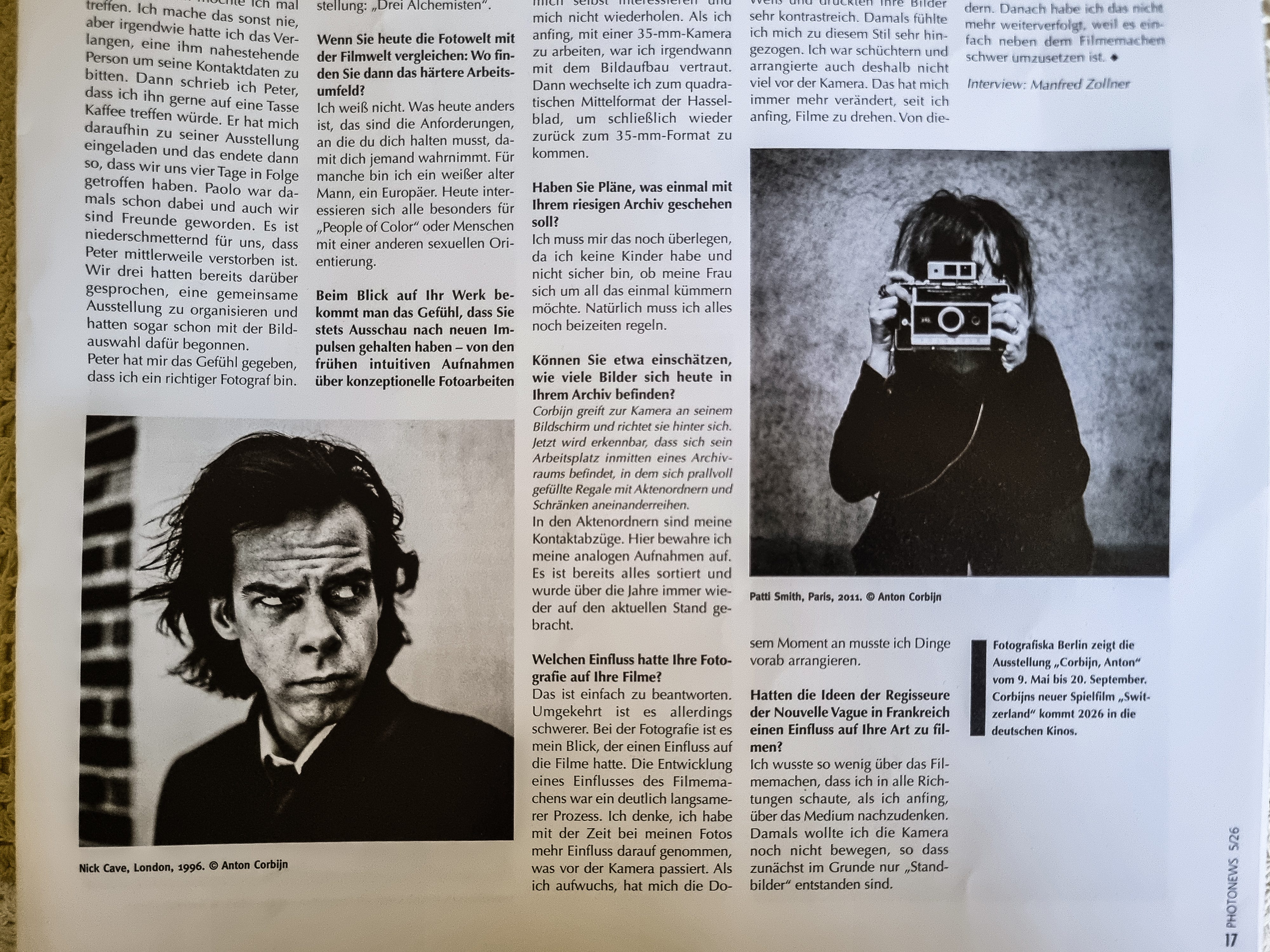
The portrait artist to whom I have paid little attention so far, but whom I have been coming across more frequently of late, is Anton Corbijn, whose work is currently on display at Fotografiska, Berlin. The May issue of FotoNews features a lovely article about him, complete with a few examples of his art. He manages to stage his subjects – or allow himself to be staged – in such a way that the portraits become captivating precisely because of this staging. Perhaps the secret to his striking portraits lies in a side note in the interview, where he points out that he always travels to meet the people he wants to portray. In other words, he captures them in their natural habitat.
Then, as is often the case when I’m mulling over a topic, I came across the podcast by Alex Hagmann and Miriam Zlobinski (in German), who were pondering precisely these questions in their conversation. Another fascinating question raised by Alex and Miriam is whether a portraitist has a duty to show their ‘subject’ at their best. Traditionally, if you trace portraiture back to the days of painting, it seems to have been the case that painters – and later photographers too – were paid precisely to create as ‘beautiful’ an image as possible. In that respect, Bruce Gilden is someone who quite blatantly flouts this convention. I agree with Alex on that point, though whether that’s something to be condemned remains an open question for me.
»«
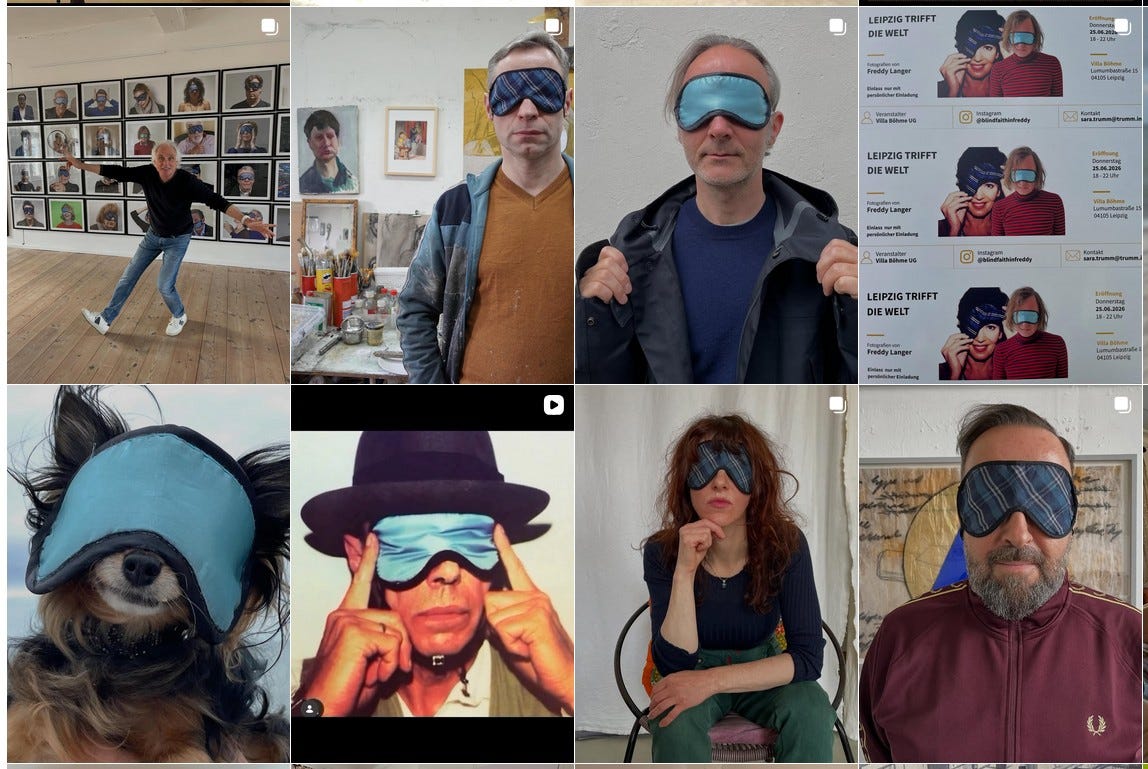
Towards the end of the podcast, the two of them get sidetracked by the question of how meaningful veiled portraits actually are. Freddy Langer immediately springs to mind with his ‘blindfaithinfreddy’ series on Instagram, and of course Stefan Moses with his mask games, but there are surely plenty of other examples where the interplay of concealing and revealing, reveals more than simply showing things directly.
There is a place in London that is nothing short of a Mecca for portrait art. It is the National Portrait Gallery in London. It’s been a few years since I was last there, but I still have vivid memories of it. Furthermore, it is also where one of the most prestigious prizes for portrait photography is awarded. The Taylor Wessing Photographic Portrait Prize.
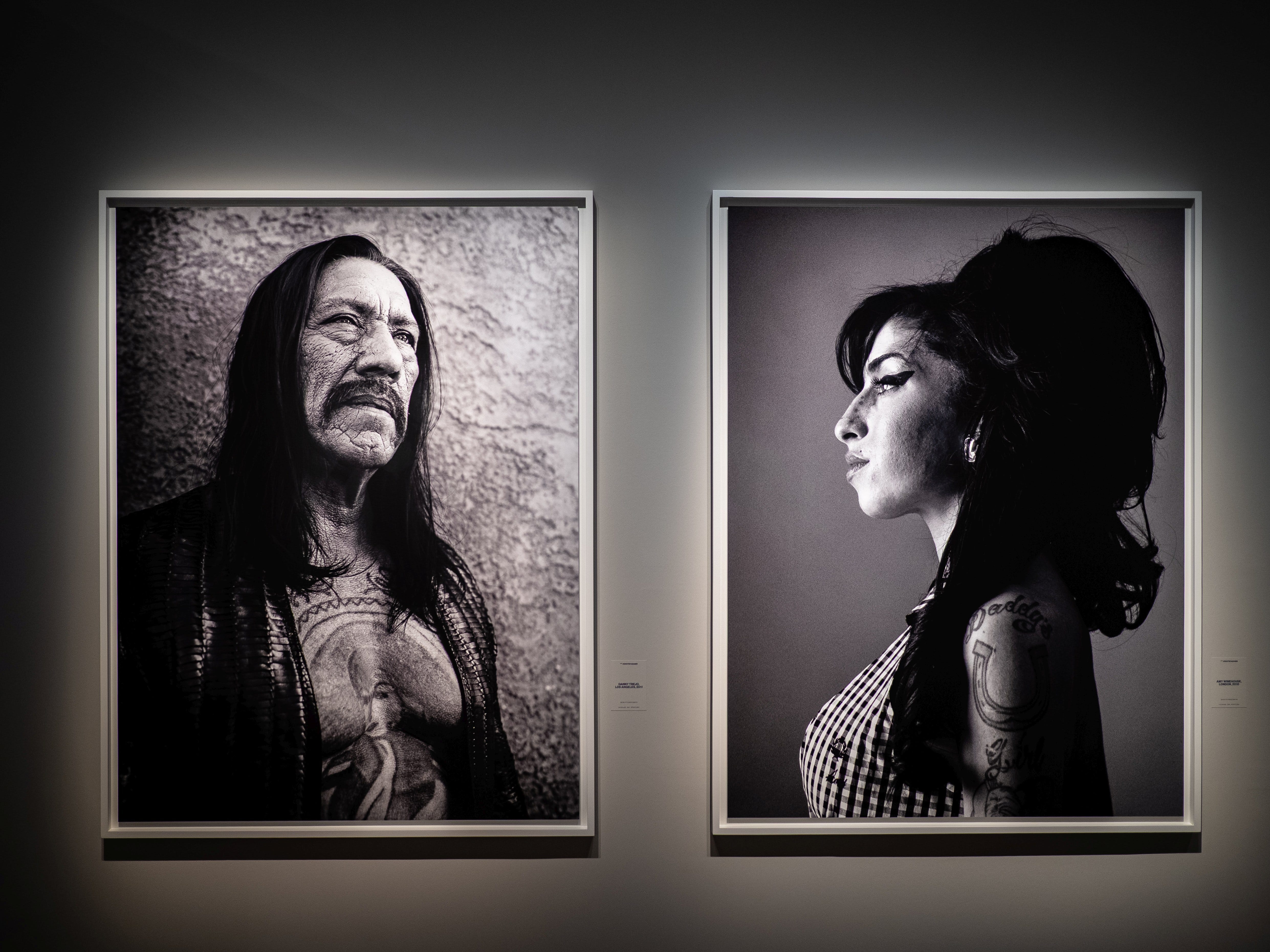
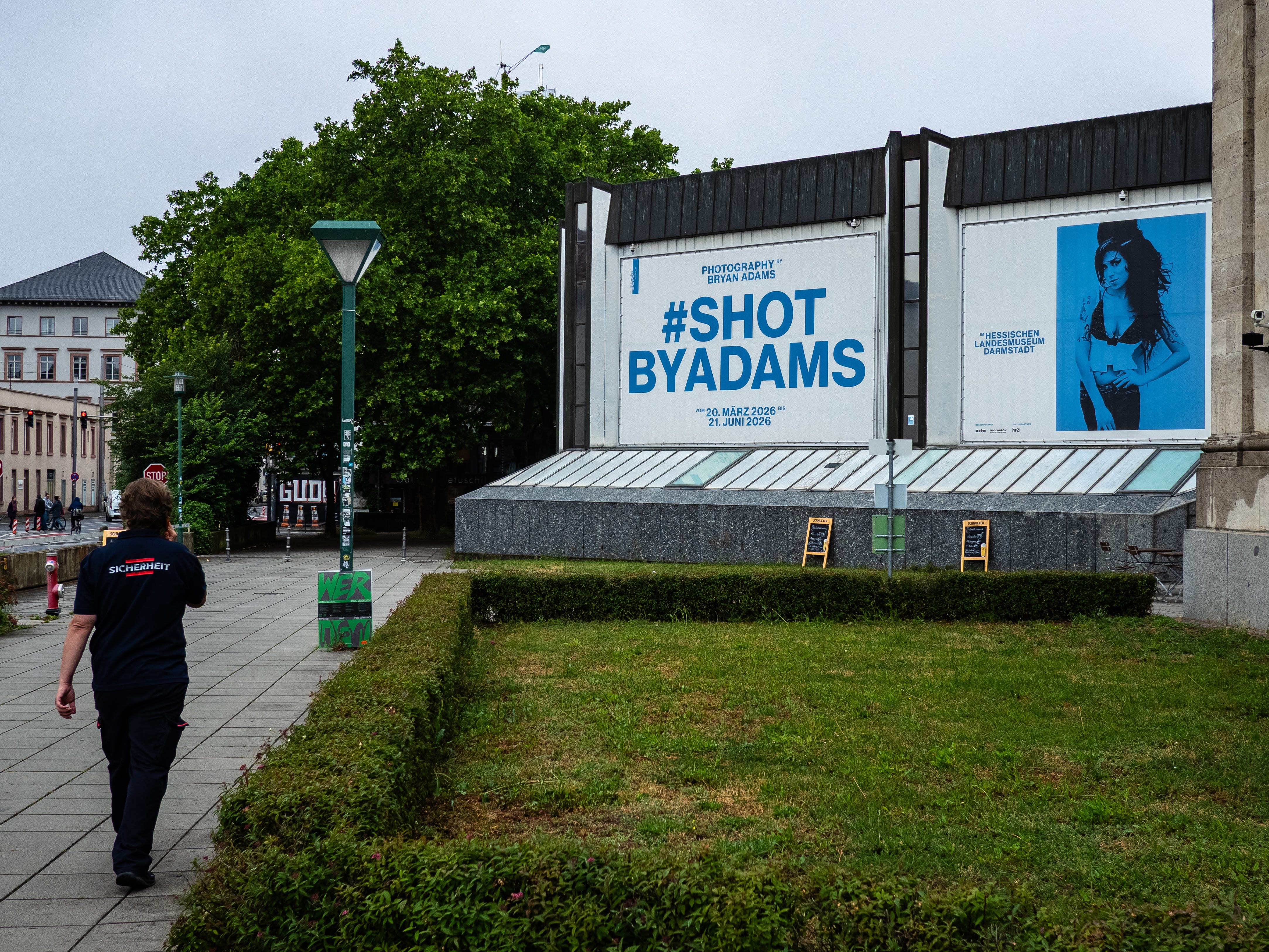
Finally, to round off this topic at least a little, I went to see the ‘#shotbyadams’ exhibition in Darmstadt. Bryan Adams seems to have been taking photographs alongside his music career for at least 20 years. He mainly photographs fellow celebrities, albeit in poses which I’m not sure a less prominent photographer would have managed to elicit from them. That, at least in my view, is what makes these full-length shots so compelling. Other series were also on display, though they all followed the conventions of portrait photography. A ‘collection’ of homeless people presented as a series; a series featuring war veterans who display their scars with just as much pride and impact as the celebrities display their poses. And finally, as a first step towards becoming ‘iconic’, the most famous portraits are shown once again in black and white with a coloured filter placed in front of them, so that the light areas appear coloured.